Monday, July 03, 2006

Neil, Jack and Somebody


Which Crim do YOU like?

All musicheads know the band King Crimson, but in case you are in the dark go here: http://en.wikipedia.org/wiki/King_Crimson

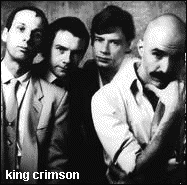
Like any artist, the brothers Crim have gone through many personnel changes with one exception: Robert Fripp, the band's founder and unofficial leader. He is still a sour puss who would rather drive nails into his foot than sign autographs, but we'll get to that.

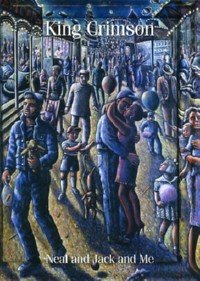
Watching the DVD Neil and Jack and Me has made me begin to think about all things Crimson. What is this Crim thing all about?

On the whole, Crimson fans are incredibly loyal, vocal, sincere and some even have an unhealthy, obsessive admiration for Fripp. I believe they see (or use) Fripp as a symbol of their own uniqueness. Crimson as the thinking person's music, blah, blah. Yes, it sounds like teenage hero worship, but there it is.

Crimsonites can also be so loyal to one period and one period only. The Crim periods can be divided into three: 1969-74, 1981-84, and 1994 to present.

The '69-74 period shows a band at times groping for a direction, but when they really all come together, the results are amazing. They were creating a new rock language- a language which influences bands today (Tool would be a good example). Here the convergence of jazz, blues-rock and even concepts stolen from 20th century "classical" music make up the Crim compost of influences. As any VHS Behind the Music ominous voiceover will tell you, there came a time when "things began to turn horribly wrong." and the Crim disbanded. Some older folks can't get past this period and love to snuggle their gatefold remasters of "In the Court of the Crimson King." Nothing wrong with this period, some of my favorite Crim is from this era, but these constant reissues are so irrelevant to me.

The 80's Crim is my favorite incarnation. This DVD shows the Belew-Levin-Bruford-Fripp lineup in fine form. Bruford looks like he's having the time of his life, running around playing both acoustic and electronic drums. Belew makes it all look so easy as he releases those monsterously strange sounds from his guitar. Sour puss Fripp looks like an accountant or a classical musician who's wandered onto the wrong stage. But, the guy who puts it all together is Tony Levin who is simply one of the finest musicians of our time. Watching his hands playing the stick is worth the price of admission.

The music played on these concerts hasn't aged and all the band members have their moments of brilliance.

The 1994 to present group, I have to admit I have limited appreciation for. While there are some good tracks that I have heard from this time period, I feel like the band sounds like they are so desperate to do something new and consequently, it comes off as dry and academic. It's the Arnold Schoenberg period of the band. People who find chaotic dissonance played to impossible time signatures good listening have my blessing, but having gone through that in music school, I'll pass.

Give me a good groove any day.

Saturday, May 20, 2006

This One Has a Happy Ending (for once)


I have had a failed relationship that just now I am ready to talk about: the piano. Arggh. It aches me just to talk about it.

I am talking about my incompetence at the keys, my plumber's hands at the ivories, my bull-in-a-china-shop piano playing. Strictly speaking, I am a failure at the piano. There. Weeks of support group have allowed me to say that.

So complete is my failure, that I have joined Piano Players Anonymous- a group that meets every Thursday evening. There, in the basement of a church, we first congregate around really bad coffee and second-rate donuts before we get down to the painful business of recovery. We settle in, sitting in a circle and then some brave soul gets up and begins to spin a very familiar tale.

"My parents insisted that I take lessons."

A collective groan from the group always follows. I've seen grown men have to hide their tears. They usually bend over in their seat and try to shield their faces or pretend that they suddenly need to clean the lens of their glasses. The group draws no attention to this very familiar tactic.

"And no matter how horridly I played, they kept bringing me back each week."

A woman says outloud without realizing: "Me too!" Someone places a comforting hand on her shoulder. We are here for each other, no doubt.

"And every week I mauled Beethoven..."

"Fur Elise!" Yes! We all gasp. Most of us suffered through the first part, but then hit the Ivory Wall at the B section. Our collective pain is like a wave, flowing in sync from one to the other.

"Or Mozart. Schumann. Even the most basic four-part hymns. I just couldn't..."

"Mrs. [fill in your teacher's name here] was so nice, but I know she must have loathed to see the one student she had failed to teach come in that door every week! Years later, I saw her and I swear to you all that she crossed the street to avoid me!"

Silence. Then quietly, the clincher always comes:

"I just didn't get it."

That one never loses it punch. Usually there follows a pregnant silence as we all go suddenly into self-reflection mode replaying the same weary questions: Why didn't I get it? How can your hands do two different things at the same time? How can the man-ape navigate eighty-eight uneven keys?? Shouldn't he be hunting/gathering rather than trying this intricate task? The man-ape can only pound upon it hoping to kill and eat it. This is my plight.
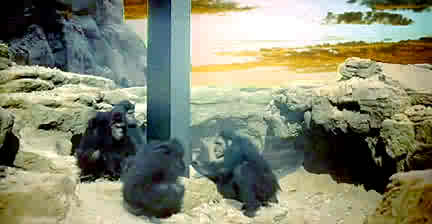
I always think of that scence from 2001: A Space Odyssey when the apes gather around the strange black monolith sensing its power, but can not grasp the meaning.

My own story is hardly unique.

My parents had good intentions. They said the piano was a basic instrument that all musicians had to learn how to play and since I was going to be a music major, the die was cast. The lessons were set for Friday after school at Herbert's Music in downtown Charleston.

Mrs. Lusk was not your regular piano teacher. "Eccentric" doesn't quite cover it. Her laugh was sincere and full, but a high cackle is the best way to describe it. I remember she wore garrish orange-colored pant suits that had with ice cream cone designs all over them. Yes, I am serious. Her claim to fame, according to her, was that she once worked with the Laurence Welk Show and every year they sent a Christmas card. "They're still want me back" she'd say.

She once told my parents that she believed that the Soviet Union was aiming some kind of invisible ray at the United States as a form of mind control. Her excentricities were written off by my parents because of her living conditions. Mrs. L definately had a hard existence and lived hand-to-mouth, residing in the old Holley Hotel. The kind of place that Tom Waits could write a fistful of songs about.

Mrs. Lusk taught me to practice each hand separately and then put them together.Well, it was the together part that always slowed my music reading down to a glacial pace. Shortly into the together part, I'd look over and Mrs. L was snoozing; probably dreaming of some far away place where prodigies dazzled her with Rachmaninoff and Liszt. Mrs. L never failed to fall asleep during my lessons, but I wasn't offended. I enjoyed the momentary freedom away from the Herculean effort at the ivories. Besides, I felt kind of sorry for her having a lamebrain like me for a student. We were both bearing through the unpleasant process, so if she wanted a little nap, well by God she deserved one. One time I watched the clock and she slept solidly for ten minutes complete with vocal fireworks. I'm surprised the people having lessons next door weren't completely disturbed by this.

The best part of the piano lessons was the trip afterwards to Arthur Treacher's-a fried fish place that was on Virginia Street. Fried fish swimming in malt vinegar with greasy "chips" for piano boy- a great reward for a mediocore piano student whose teacher fell asleep. Life is good. Mission accomplished.

My doomed relationship with the piano continued in college. It followed me like a shadow.

In college, I had a nice teacher who tried to get me to play some Chopin. Every week, she would tell me the same story about how Chopin and his love George Sand (a woman) spent this romantic period on an island together and thus was the inspiration for the piece I was practicing. I found that getting her to tell this story over and over again was an excellent way to waste most of the weekly half-hour lesson. She always obliged and never caught on. At the final playing exam, I could see her obvious disappointment when nerves got the best of me and I all but butchered the old Pole's beautiful music. Once again, that together thing threw me.

But there was hope. A hope not founded on competance or the lack thereof, but on reduction. A reduction of the complexities. Counterpoint? Nay, pounding-point. There was one course in college called Functional Piano that made me realize that not being pianistically gifted was not an impediment to enjoying playing. No finger exercises, no sonatas or four-part hymns, but take all the shortcuts. It was piano reduced down to its most basics: left hand plays chords while right hand plays melody. The man-ape gets that. Left hand and right together! Not separate- that hurts man-ape's brain.

This class was taught by Mr. Fitzgerald, who was, shall we say a bit colorful and flamboyant. "Fitzy", as we dubbed him, taught this class Friday at 8 AM. Friday at 8AM is a most brutal time for a college student who was unlikely to go to bed Thursday night. One such sleepless occasion involved a playing exam. I don't know how, but I passed with flying colors. I attribute this momentary success to Foster's Lager.

This one has a happy ending. Hurrah!

I get it from readers who ask, "Why are you always writing about bad things? Think happy thoughts, man." Well, this one has a happy ending.

Truthfully, I have resolved the struggle with the piano not based on competence, but through acceptance of my incompetence. I quit trying to play the piano properly and bring it down to my level: left hand chords-right hand melody. Sort of a guitarist's approach to it. Or simply: man-ape no longer fears fire, he has learned to cook with it.

If you took "pain-ano" (or other) lessons and my story has some ring of truth to it, all I can say is this: if you still regret not continuing playing, you are not alone.

We meet every Thursday night. Donuts are bad and the coffee worse, but the company is good.

Saturday, May 06, 2006

Philip Glass: Some Kind of Monster

To some, Philip Glass is a monster. But we'll get to that. Let me share some things first.

For any serious listener, even if you do not like Glass' music, there are two essentials: First, download the Philip Glass interview conducted by Ira Glass (host of This American Life) from Fresh Air's website. This interview is funny, insightful and if you write music, Glass will open your mind and his observations on music will change your creative life.

I have tried, in vain, to get my set-in-their-ways twenty-something students to listen to this interview, but like the rest of the music world, they are already well on their way to being close-minded. It's a shame because they are so young, yet they have shut down an essential process in a creative life: reinventing yourself, questioning tried and true methods of operation, staying open to your creative instincts and a willingness to abandon everything you have learned in order to discover something new.

The second essential is this documentary Philip Glass: Looking Glass, directed by Eric Darmon. From the minute this documentary on composer Philip Glass begins, it's apparent that we are in for a treat. We hear Glass talking on the phone as the camera focuses on various photographs, art works, music scores, scattered around his New York apartment. This is look into the private life of this incredibly busy composer. The film follows Glass around NY, Paris and London. Mixed in are interviews which contain recollections about his early years, his formal studies and we even watch Glass working on a score. A great DVD for sure, but a bit short coming in at 103 minutes. Bonus features include a Glass interview and performance.

Then there's that whole Glass as "water torture" (lovingly described by someone) reaction from traditional classical audiences.Glass tells us that "the world is far more conservative than you can ever imagine" as he recalls the days when he had to play in lofts and art galleries because the traditional concert hall crowd was "terrified of amplified music." Taking refuge so to speak in galleries, he reveals that "in the world of art, innovation is accepted and welcomed" but in music, that is not the case.

Mention Philip Glass to your average classical listener and you'd think that you were talking about the Devil himself. Like he's some kind of beastly monster hell bent on the destruction of Western civilization, beginning with music. Glass (and his contemporary Steve Reich) have to be at the top of the list of contemporary composers most reviled. At one concert, Glass has recalled that tomatoes have been thrown in protest and even struck a few of those on stage. As he slyly states, "You don't bring tomatoes to a concert unless you plan to throw them." Why then pay money for a ticket? Because, to some people, their taste in music is more important than behaving in a civilized manner. Which, ironically, an appreciation of classical music is supposed to be a reflection of being civilized. An irony evidently lost on the classical set.

Glass recalls a time when he and other contemporaries were regarded by the more traditional composers as “primitives”. One time he showed some of his scores to another composer at a radio station in Germany. Although Glass was 31 at the time and had graduated from Julliard and his studies with Nadia Boulanger, the other composer puzzled over the music for a while and then let out this remark: “Have you ever considered going to music school?” Always gracious and with good humor, Glass says that he let this remark go and thanked the man for looking at his music. Glass’ confidence in his chosen path is unshakeable. I admire that.

Even terrible reviews don’t bother Glass and his ensemble. He has stated that “most are hilarious and the ones that review favorably don’t go far enough.” How has he not only survived, but thrived in an environment that is clearly narrow-minded, conservative to the extreme and clearly quite hostile to Glass’ music? In some ways, he has done an “end-run” around the usual classical channels by first engaging the art, dance and writer’s communities. He made his own gigs, in other words. It was only after touring and promoting his music through nontraditional venues that eventually he got commissions to write symphonies, concertos and the usual formats of the symphony orchestra. He is a man who deserves our admiration, even if only for never giving up and keeping to his dreams.

While I would count myself among Glass' audience, and he has truly brought something new to classical music, I sometimes wonder now if he isn't just repeating himself. The Glass style is the most easily recognizable in the world of music right now. But that’s the problem, he always sounds like Philip Glass. Symphonies, string quartets, you name it-always the same way of organizing music. He once said that young composers copy everybody else until he/she finds their own voice, but once you find it, Glass says “It’s hard to get rid of the damn thing.” He has fallen into his own formula without intending to. I like it when he breaks free, like the marvelous Aguas de Amazonia with the Brazilian ensemble Uakti.

One time after about a nine minute piece from Glass’s Naqoyqatsi (A piece used in a national PBS promo. Ok for them but not us, yes? ), a lady called me. She asked me why I was playing Philip Glass. I said that I liked the music. She suggested that I might have hit my head too hard against a wall or something to come to that conclusion. I was in a good mood that day and humor was my best friend because I actually laughed at her rather insulting remark. I then asked her:
“M’am, do you like rock music?”
“No, I’m afraid I’m too old for that.”
“Do you like Indian music like Ravi Shankar?”
“No, can’t say I do.”
“Then that’s why you don’t like Philip Glass.”
There’s no way I convinced her of anything and soon the call ended. But it won’t end there. Never. Nope. No way. I’m always going to hear about it when I cross the line into contemporary territory and it is in my nature to explore the world of music. Can’t help it. I’m just made that way.

Sometimes, after a particularly insulting email or phone call, I laugh and think about what poor old Phil Glass went through. No one has ever thrown a tomato at me.

At least, not yet.

Thursday, May 04, 2006

Notable New Discs

A listener asked about some recent discs I've been playing. Here's the rundown and the scooby on them, kids. Enjoy.

1. Bitter:Sweet-The Mating Game. Super cool retro sounds that sound like a lost soundtrack to a James Bond film.
2. Thievery Corporation-Versions. Do these guys ever put a out a bad record? Nope. The 18th Street Lounge boys "dub out" tunes by the Doors, Bebel Gilberto and others. It's pretty dern eclectic.
3. Tosca-Souvenirs. Tosca and Thievery Corp should do an album together because they work the same way, despite the slight difference in their sounds. This is an album of remixes of their release J.A.C. done by their DJ friends. The remixes of cool tracks like Superrob are worth the admission fee alone. There is one joke among the lot. The one original track submitted by Tosca is about 4 seconds long. This should really make the collectors who are often called "completetists" a bit hot around the collar.
4. Gotan Project-Lunatico. This release revolves around the evolution of the tango rhythm and all the variations that technology and musicianship can bring. Great fun, but not many tracks were outstanding.
5. Ursula 1000-here comes tomorrow. Hilarious, fun, cocktail shaking music. Try to resist the fab cheesy tongue in cheek vocals mixed with the smartly played and arranged music. Quit now while you are ahead. If I had a swinging social life, this album would remain in permanent rotation all night. Prince meets Austin Powers in a Manhatten cocktail bar.

Well, that's the short list for now. If you missed the playlists, go here.

Thanks!

Saturday, April 29, 2006

Stranger Than Fiction


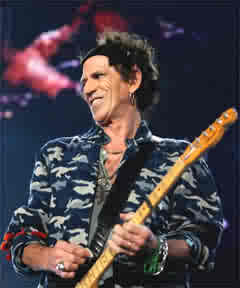
WELLINGTON, New Zealand (AP) —Rolling Stones Keith Richards was hospitalized for a mild concussion he suffered while vacationing in Fiji, reportedly after falling out of a palm tree.

Reports on CNN stated he and Ron Wood were climbing a palm tree when Richards fell.

I want to know the conversation leading up to this.

Why did two senior citizens decide to shimmy up a palm tree? To see the ocean better? They weren't high enough already?


Officials say that Richards declined pain medication, but requested a Marlboro and a shot of Jack Daniels.

Wednesday, April 19, 2006

The Five Films


A trend has been started. Film Geek posted the five films that changed his life. My buddy Primal Scream guy did one. I think it's a really cool idea. So, for your amusement, I post such.

To really think of films that changed you. Not films that amuse you, but actually had a real impact. Narrowing it down to five is hard, but here goes: The five films that changed my life.

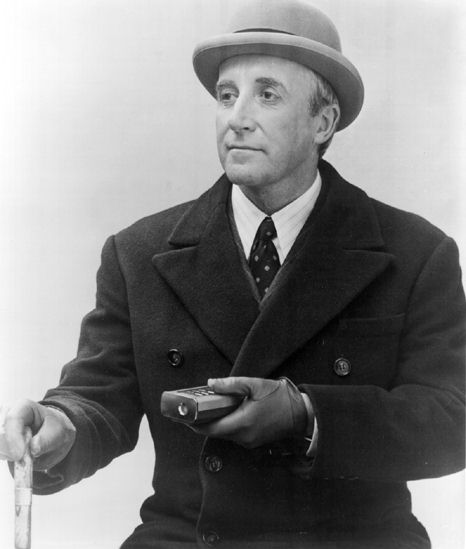
5. Being There. Peter Sellers as the oddball Chance Gardiner is pure genius. The film is flawless in sustaining gentle, understated humor. On some level, I related to Chance being so out of step with the world because so often I feel that way. The world hums along at a rate and manner that I feel totally at odds with at times.

It is a film that makes me feel good. After all, as Chance says:

...And if you give your garden a lot of love, and if you work very hard and have a lot of patience, in the proper season you will see it grow to be very beautiful...


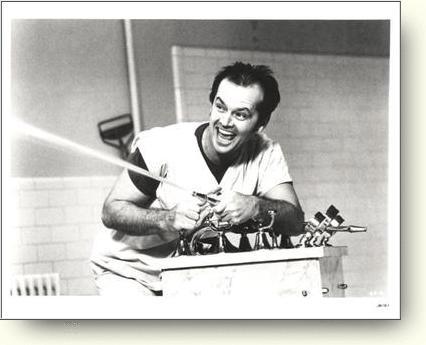
4. One Flew Over the Cuckoo's Nest. Aren't we all, in some way, fighting a system that threatens to dehumanize us? Nicholson gives his best ever performance as Randle P. McMurphy who is ultimately destroyed by a system that values order and protocol over humanity. Sounds like where you work? You betcha.


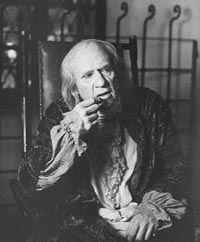
3. The Elephant Man. I can not fathom someone watching this and not being moved.

I think of Dickens: "It may be, that in the sight of Heaven, you are more worthless and less fit to live than millions like this poor man's child. "


2. Amadeus. How do the merely talented contend with genius? Does it eat them up inside with jealousy? Is there rage against God because of it? How does a creative life continue with the knowledge of limitations? Every artist must resolve this issue or be eaten up by jealousy. This film knocked me out.

At the end, while being wheeled down the hallway of the asylum, the elderly Salieri cries out: I am the patron saint of mediocrity! I absolve you! I absolve you!

Incredible.


1. Apocalypse Now. No kidding, I debated whether to put Hamlet. (1948, Sir Laurence Olivier) at number one, but Apocalypse Now clearly outranks it. People at first thought that this was just another indictment of the Vietnam War, but time has shown that the film has a much broader meaning. This is just a metaphorical journey of the soul with the warning that when we look into the darkness, it also looks into us (to paraphrase Nietzsche). Brando is so awesome as the insane Kurtz and the narration by Martin Sheen is unparalleled. Simply a flawless film, but one to be viewed sparingly.

As a friend said as he returned a tape soon after I loaned it to him: "It began to hypnotize me. I began watching it in the morning as soon as I got up."

Bad way to start the day, dude. Start with coffee.


Well, that's my five. A very tough assignment. Enjoy. Do a list yourself.

Friday, March 31, 2006

Guilty Pleasures


Have you discovered iTunes yet?

[Note to younger people: buy the music, support the artists, especially those who are independents! They need your support. End of sermon.]

One thing about iTunes they don't tell you: nostalgia is reasonable.

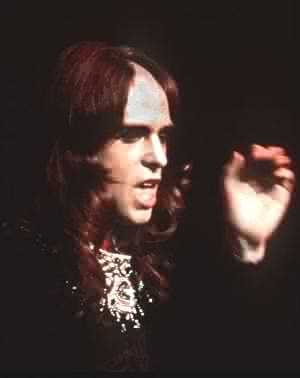
(Peter Gabriel. front man of Genesis, circa 1970)

These Apple people keep adding more and more music to the iTunes store-even stuff that's ancient history. Lately, I've been downloading some relics of the past- real guilty pleasures. The Rolling Stones back catalog are right at the top of this list for me. Evidently I am not alone in guilty pleasures.

A friend of mine recently confessed to purchasing, on the cheap through a European iTunes-like service, old rock songs from Genesis. There was a tinge of guilt when he asked if it was normal to be revisiting the music of the past. Of course it's normal, I replied. Nothing wrong with walking down the old nostalgic path, as long as you don't try to live there.

Important note to music snobs: all of us have guilty pleasures when it comes to music. All of us have found pleasure in pop music from time to time. Admit it now and feel better.

Genesis was an art rock band (much like Pink Floyd) before they became corporate FM hitmakers producing painful hits like Invisible Touch and I Can't Dance. This artful era Genesis was the music of our youth.
Just like any teenagers, we idolized Genesis and especially their strange front man, Peter Gabriel. No wonder! Gabriel took to wearing outrageous costumes on stage and at one point sported a haircut that had a small section of his head shaved. Rumors in the press suggested that he was mentally ill. This added to the Gabriel mythos.

(LEFT. Ok, the guy was a little wacky.)

One of our friends got us started on this environmental kick where we revered nature and hated all developments, especially cities. Somehow, we saw all these man-made structures as being destructive to the ultimate beauty and harmony of nature. Long, arduous hikes in Kanawha State Forest were seen as a part of this ideology that sometimes seemed to border on a theology. This wasn't a forest, but a refuge, a sanctuary, and a place to commune with something higher than oneself. Yes, now it sounds ridiculous, but back then we placed all this radical environmental ideology into the music, interpreting lyrics as a sign that Genesis felt the same way we did.

My friend and I have long past these foolish youthful ideas. Eno talks about gracefully giving up "the baggage of youth."Still, I find myself looking at the Stones' back catalog every time I wander into Best Buy. There I look again and again at Some Girls, Goat's Head Soup and Steel Wheels. I finally came to the conclusion that purchasing an entire $13.99 CD is stupid. iTunes will let me download the songs I want at 99 cents a pop. Fine with me.

My friend's conclusion after all this: some of this old music is just unlistenable. Good thing it was cheap.

If you're going to get nostalgic:


don't spend a lot of money.

Thursday, March 16, 2006

Ernie's Joke


The following is an original joke by Ernie, AKA, Ernesto Magnito:

This guy went to an appliance store and bought a electric cooking stove. He went home and used it, but then had to take it back. WHY?


Because he got burnt!

Friday, March 10, 2006

Tidbits

Strange coiffures

Last night, after a late night trip to Kroger, drove past the local no-frills barber shop only to see a man getting a haircut at 11 at night.


Thursday, March 09, 2006

The Connoiseur's Guide to Carnivorous Cadavers (or He Rambles On Again)

PART ONE: THE BACKGROUND

?

I already know what you're going to say, so just say it and get it over with.

What the heck are you talking about now? Why must you torture us with this nostalgic cinematic minutia?

Answer: because I must!

Let me say this, not as disclaimer, but as something to keep in mind as you read this: there are people who are even worse about this than me. In fact, it is almost a cult.

FACT: There is a fairly strong cult-like following of the horror movie subgenre-zombie movies. So strong that Hollywood and other less powerful filmakers have taken notice and subsequently, films of this genre have been to sprout all over.

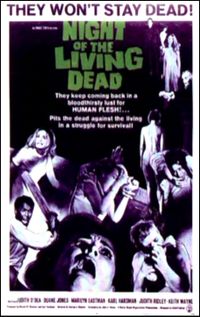
I saw Night of the Living Dead (1968) when I was kid living in rural Pennsylvania on the late-night Chiller Theatre on channel 11 out of Pittsburgh. I have blogged about this before, so I skip those details, but imagine a ten or eleven year-old watching this stuff. I was scared out of my mind. This was commercial TV in the 60's, so no ratings for TV programs back then. What would this film get now: an R? PG13?

Romero and company not only created a NEW genre of horror film, but they broke new ground both artistically and the whole gore-violence thing. The premiere was met by outrage, controversy and conversely with undying, unconditional love by the new fan base that Romero had now created.

The real point of this was that this film, the genesis of all zombie films, was made by hometown (Pittsburgh) hero George A. Romero. The film was not only produced by Romero, but shot around Pennsylvania as well, making it a true homestate project and elevating Romero's status among his fans. In fact, people make trips to see the graveyard which opens the film and post their pictures online. It is now a cult.

Then Romero released Dawn of the Dead (1978) which I saw with a few of my college friends. Back then, Dawn freaked me out. We all just spoke in broken phrases on our way back to our dorms. Today it looks a bit comical and low budget, but like Night, it broke new ground in the gore department and truly sealed Romero's status as a cult figure, an icon of international stature. In fact, people take trips to the Monroeville Mall, still in existance, as some kind of baptismal journey-wanting to be just a little closer to the magic of film and history. Long before this cult status, this mall is part of my personal history and was just as surprised as anyone that people would actually view it as such a cult landmark.

YES, you read that correctly-international stature. Romero now has four films in the zombie genre with the last being Land of the Dead in 2005 and since that first film in 1968, each new generation has discovered these films and claims them as their own. Not just in America, but Germany, UK and Italy, there are fanatical followings. Italy's Dario Argento was involved with the making of Dawn and even cut his own version of the film which was revered by the lucky few to get a copy of it (Anchor Bay released a definite FOUR DISC version of this movie because of all the versions floating around.). Italy also has director Luigi Fulci who has come out with his own set of zombie films-all of which owe great debt to Romero.

PART TWO: You must believe

Yes, I include myself among those who call themselves fans of Romero films and all things zombie, BUT you have to go here to really understand the absolute fanaticism that is out there for this stuff:http://www.homepageofthedead.com/

There you will find forums that have virulent debates over the origin of the outerspace virus that caused the outbreak of the living dead. Heated arguments over the detailed knowledge of Dawn of the Dead, the value of the new movie versus the older ones and on and on and on until you log out for fear that you may lose your mind or otherwise permanently lose all sense of reality. The information is vast, mostly accurate and highly subjective because these people are real fans: fanatics of highest order.

There is one point they can ALL agree upon though: They all love George Romero.

And his flesh-eating zombies.

Monday, February 27, 2006

Thanks, guys.


Don Knotts.


Darren McGavin.
Dennis Weaver.

Sunday, February 26, 2006

Am I Sensing a Theme?

Tidbits: I think a theme is emerging here.

A trip to the local drugstore proves interesting.

The man in front of me was dropping off a perscription. He had "that look" about him: racing flames knit cap and dark sunglasses. As he walked by, the familar sweet smell of bourbon. "Kentucky bourbon?" I wanted to ask him. Oh well, it was around 4PM.

Walking towards the front of the store, I am greeted by a large cutout of Elvis who is now evidently hawking his own line of fine (gasp) wines. "Jailhouse Red"? I'm not kidding here.

I'm in line again. The man in front of me purchases no less than three quarts of beer and then proceeds to place them neatly in a handy padded carrying case. Well, the man was prepared at least.